Navigating the Overstimulation Trap
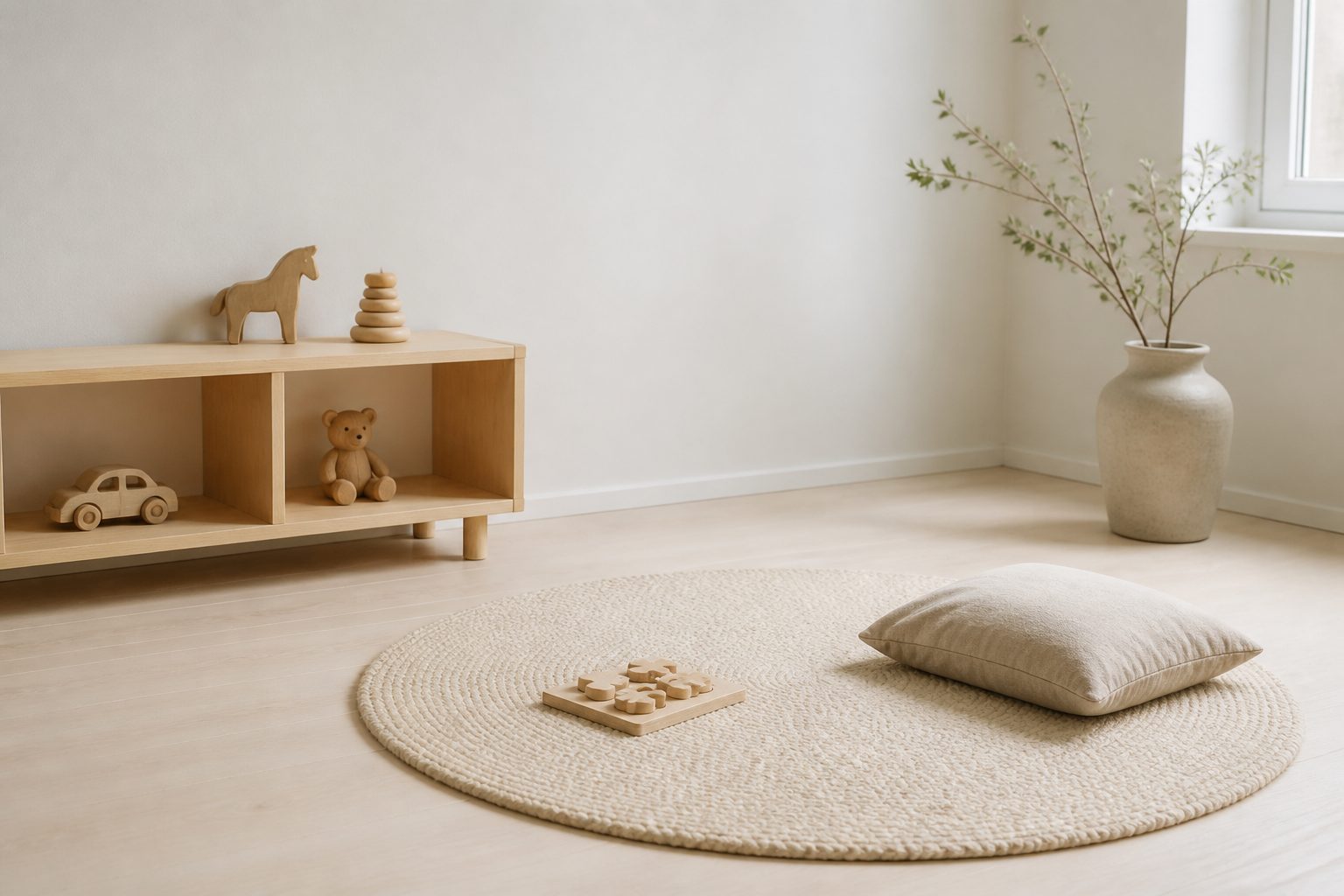
Modern childhood is loud even when nobody is shouting. Lights flash. Toys talk. Shelves are full. A playroom can look generous and still be hard to inhabit. Overstimulation is not a failure of parenting. It is what happens when a room offers more input than a young nervous system can sort.
Children do not need an empty house. They need a place where one thing can hold their attention. Breathing room is physical—clear floor, a rug that is not a staging area for every object—and it is visual. When the eye can rest, play can begin.
The trap is abundance
We accumulate with good intentions. Gifts arrive. Sets multiply. A “complete” playroom starts to resemble a shop. The child walks in and has to choose among too many invitations. Choice, past a point, is work. Many children respond by flitting, knocking things over, or leaving the room. Adults often read that as boredom and add more. The cycle continues.
A calmer room is not a poorer one. It is a room that has decided what matters today.
Start by taking things off the floor and off the open shelves. Keep a small, visible set: a puzzle, a few figures, one construction toy, a book. Put the rest behind a door. You are not hiding play. You are sequencing it.
Design for one activity at a time
A round rug with a single puzzle on it tells a clearer story than a bin of mixed pieces. A low shelf with three toys is easier to reset than a wall of cubbies stuffed to the edge. Leave negative space. Empty floor is not wasted; it is where bodies move and where a game can spread out.
Color behaves the same way. A room in cream, wood, and one or two muted accents asks less of the senses than a room where every object is a primary color. Bright toys can still exist. They simply do not all need to be out at once.
A weekly reset that actually works
- Choose a handful of toys for the open shelf
- Return the rest to closed storage the same day
- Keep one clear surface with nothing on it
- Swap a tired set for a stored one after several days, not hours
Protect quiet on purpose
Sound is part of the load. If several toys make noise, none of them need to be out together. If a screen is in the room, it will usually win. Give play a chance to be analog for stretches of the day: no background cartoon, no talking toy competing with a wooden horse.
Overstimulation is also social. Visitors, errands, and a full calendar fill a child’s day before they reach the playroom. A quieter room cannot fix an overfull week, but it can be the place that does not add more. That is enough of a job for a shelf, a rug, and the discipline to leave space empty.
