Designing a Calm Sanctuary for Sleep
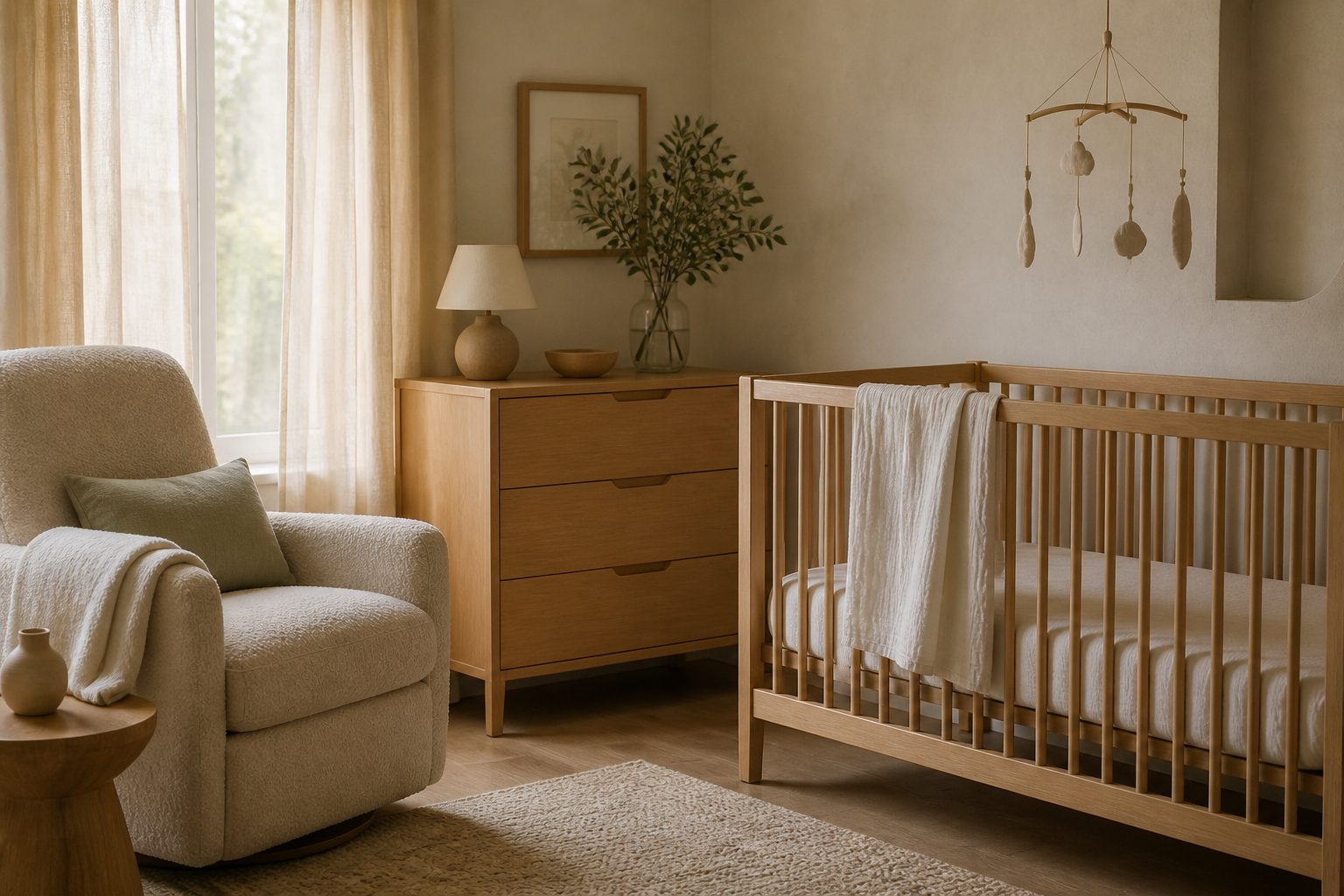
A nursery does not need to be a showroom. It needs to be a room a baby can fall asleep in, and a room a tired parent can move through at 2 a.m. without thinking. Calm is not a color palette. It is the result of fewer decisions, softer light, and a layout that protects rest.
Most nurseries become loud by accident. A gift pile grows. A changing station collects products. A night light is too bright, then another is added. The room that was meant to feel still starts to ask for attention. Designing a sanctuary is mostly about reversing that drift.
Start with sleep, not with décor
Safe sleep comes first: a firm, flat sleep surface, a fitted sheet, and a clear crib. Soft toys, pillows, and loose blankets belong elsewhere. Once that is settled, the rest of the room can support the people who use it—feeding, settling, changing, and sitting through the long stretch of early months.
If the crib is the quietest object in the room, the rest of the design is working.
Keep the sleep zone visually simple. A wooden crib, a mobile with slow movement, and a wall that does not compete for attention are enough. Pattern can live on a rug or a throw that is used while you are awake, not on the sleep surface itself.
Light that winds the room down
Overhead lighting is rarely kind at night. A single warm lamp on a dresser, a dimmable wall sconce, and blackout that actually closes will do more for sleep than any themed mural. Aim for a low, even glow you can navigate by, not a spotlight that wakes a baby fully when you reach for a diaper.
Daylight still matters. Sheer curtains soften the morning without sealing the room in. If afternoon sun hits the crib, a second layer of lining is worth more than a decorative valance. The goal is a room that can be bright enough for play and dark enough for rest, without rearranging furniture every time.
A practical lighting plan
- One warm lamp (2700K or lower) within reach of the glider
- Blackout at the window, not only a pretty drape
- No harsh ceiling light as the default night option
- A small, shielded night path to the door if you leave the room
Materials that stay quiet
Hard, glossy surfaces bounce sound. Soft, matte ones absorb it. A wool or cotton rug, linen drapery, and a glider with a substantial seat all help the room feel physically quieter. Choose a palette that does not shout: cream, sand, pale oak, a muted sage. These colors photograph well, but more importantly they recede, which is what a sleep room needs.
Storage is part of the atmosphere. Open shelves filled with every outfit will keep the eye busy. Closed drawers for clothes, a single tray for daily changing supplies, and a hamper that is easy to use will keep the room from looking like a retail wall. Put extras in a closet. The nursery only needs what this week requires.
Leave room to move
A calm layout is a generous one. You should be able to reach the crib, the dresser, and the chair without turning sideways. Keep the floor between those three points clear. If a piece of furniture is beautiful but blocks a path, it does not belong here yet.
The last ingredient is a rhythm, not a product. Dim the lamp at the same point in the evening. Lower your voice. Put the day’s objects away so the room looks like rest again. A sanctuary is maintained more than it is decorated. When the room is simple, that maintenance takes minutes—and those minutes are the ones that make sleep possible.